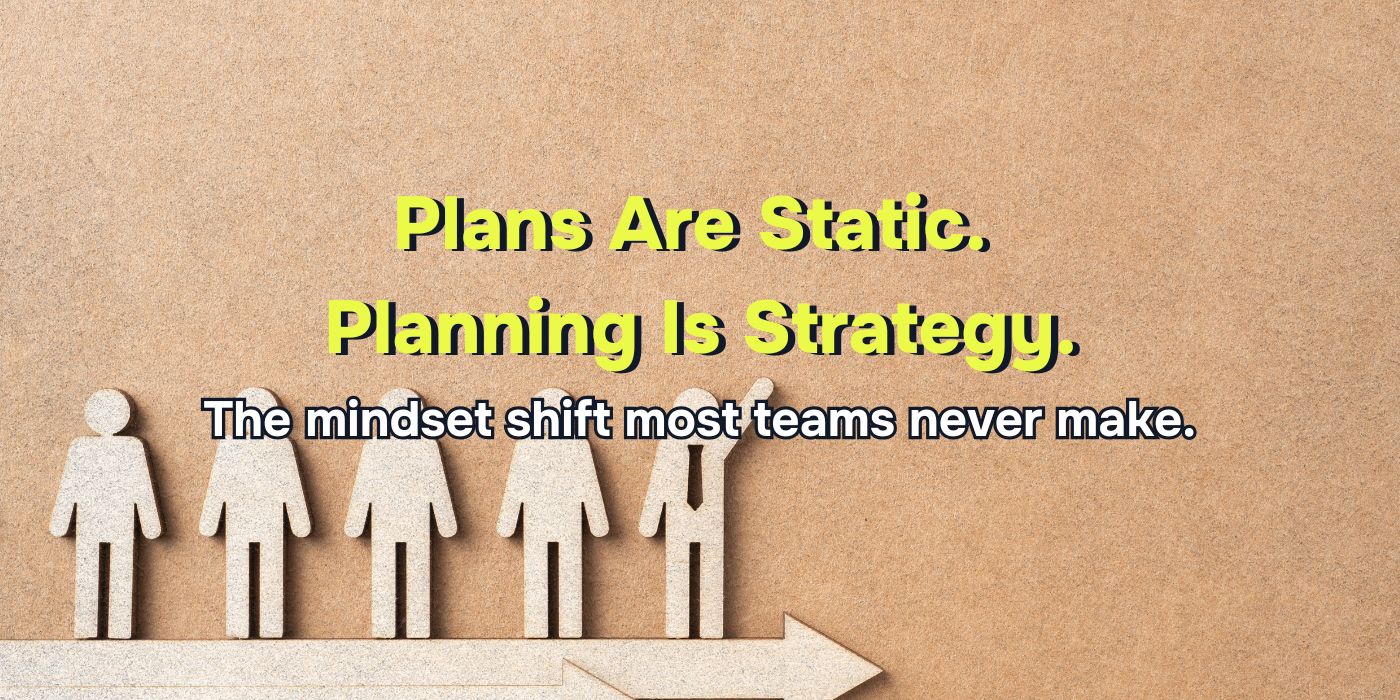
Everyone talks about plans. Fewer talk about planning.
But leaders who understand the difference don’t just react to change — they shape it.
In business, confusing plans with planning is one of the most common reasons strategy feels stale while execution feels frantic.
What “Plans” Really Are
A plan is a snapshot of intentions at a point in time.
It usually includes:
- A set of actions or steps you intend to take
- Timelines and responsibilities
- Resources and assumptions
Plans are tangible, static, and easy to document. A marketing calendar, a project roadmap, or a budget forecast are all plans — they describe what you intend to do.
But because they are fixed in time, plans can become outdated as soon as the environment shifts. That’s why they need revision.
What “Planning” Really Is
Planning is the ongoing process behind those plans.
It includes:
- Thinking through outcomes you want
- Discussing options and tradeoffs
- Aligning strategy with uncertainty
- Adapting as new information arrives
Planning is continuous. It’s adaptive thinking, not a document you finish and file away. It’s why military strategists say plans are useless once battle starts, but the act of planning is indispensable.
Why This Distinction Actually Matters
Most leadership teams treat plans like blueprints: rigid, sacred, and to be followed exactly.
That may work in stable conditions. But in real markets, businesses face:
- Changing customer behavior
- Supply chain shocks
- Shifts in competitive dynamics
- Budget fluctuations
- Technological disruption
In those contexts, a plan that never changes is a liability.
Example: A Marketing Campaign Case
Imagine you launch a year-long marketing plan. Two months in, your product release is delayed and competitor messaging shifts consumer expectations.
If you stick only to the original plan, you miss the shift. But if you treat planning as a continuous process, you adjust priorities, messages, and channels so outcomes stay aligned with reality — not stale assumptions.
How Planning and Plans Should Work Together
The best leaders think of planning as the engine and plans as the snapshots it produces:
- Planning sets direction and context.
- Plans are the operational artifacts that help teams execute.
When you treat planning as the core activity, plans become flexible checkpoints — not rigid contracts.
Planning is a Strategic Capability
Organizations that excel at planning don’t just produce documents. They cultivate systems and cultures that:
- Anticipate change rather than react to it
- Reframe assumptions when signals shift
- Deliver better outcomes with less wasted effort
- Align teams around priorities that matter now
Planning becomes a competitive advantage — especially when execution costs are low and uncertainty is high.
Rules Most Leaders Forget
- If your plan never changes, you’re planning with blinders.
- Good planning forces tradeoffs, not just tasks.
- Plans without ongoing planning are fragile.
- Planning without documentation is a conversation that never gets executed.
How to Make Planning Work in Your Company
Start by asking better questions:
- What assumptions underlie this plan?
- Which outcomes matter most if conditions change?
- What signals would make us adjust our plan?
- What plan revisions should be automatic versus deliberate?
These questions turn planning into a decision framework — not busywork.
The Bottom Line
A plan tells you what you intend to do.
Planning tells you how to keep your intentions aligned with reality as it unfolds.
When leaders understand that distinction, they stop treating plans as immovable contracts and start using planning as a strategic compass — and that’s what drives better outcomes.